AI and the Law in Malaysia

What Is Artificial Intelligence?
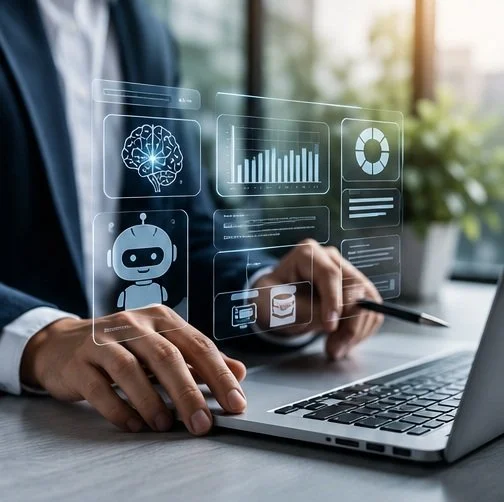
Artificial Intelligence (AI) refers to computer systems that are capable of performing tasks that would ordinarily require human intelligence. These include analysing information, recognising patterns, generating text or images, making predictions, and assisting with decision-making.
Today, AI is no longer used only by technology companies. Businesses of all sizes are incorporating AI into their daily operations to improve efficiency and reduce costs.
Common examples include:
AI chatbots for customer support
Drafting emails and reports
Reviewing contracts and legal documents
Resume screening and recruitment
Marketing content generation
Financial forecasting
Fraud detection
Medical diagnostics
Coding assistants
Image and video generation
As AI becomes increasingly integrated into business operations, organisations should ensure that its use complies with existing legal obligations.
Does Malaysia Have an AI Law?
Malaysia currently does not have a standalone law regulating artificial intelligence in the same way that the European Union has introduced the EU AI Act. Nevertheless, businesses should not assume that AI operates in a legal vacuum.
Instead, the use of AI is governed by a combination of existing legislation, common law principles and industry-specific regulations. Depending on the nature of the AI application, different legal obligations may arise.
These may include laws relating to:
Personal Data Protection
Copyright
Trade Marks
Confidential Information
Contract Law
Employment Law
Consumer Protection
Defamation
Cybersecurity
Financial Services Regulation
For example, a business using AI to process customer information may need to comply with the Personal Data Protection Act 2010 (PDPA), while an AI-powered investment platform may also fall within the regulatory framework administered by Bank Negara Malaysia or the Securities Commission Malaysia.
Businesses should therefore evaluate AI projects from a legal perspective before implementation rather than after problems arise.


Personal Data Protection
Many AI systems rely on large amounts of information to function effectively. This may include customer information, employee records, financial data, emails or other business documents.
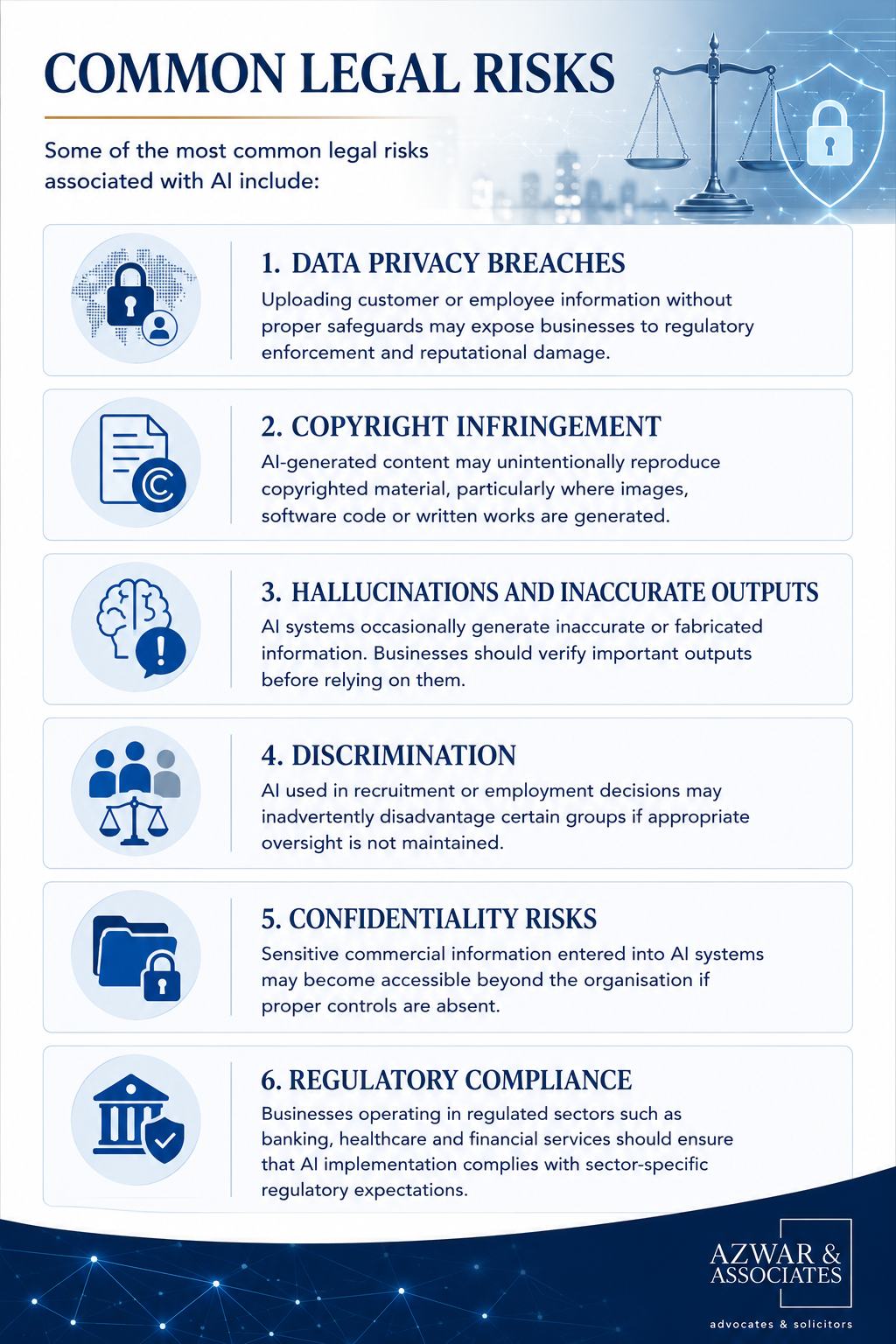
If personal data is uploaded into an AI platform, organisations should first consider whether they are complying with the Personal Data Protection Act 2010 (PDPA).
Some practical questions include:
Does the AI platform store the information?
Where are the servers located?
Is the information transferred outside Malaysia?
Can the AI provider use the data to improve its models?
Have customers or employees been informed?
Is additional consent required?
Businesses should also avoid uploading sensitive personal information into public AI tools unless appropriate safeguards have been implemented.
An internal AI usage policy can significantly reduce the risk of accidental data breaches.
Confidential Information and Trade Secrets
One of the most common mistakes organisations make is treating AI platforms as though they are private internal software.
Employees may unknowingly upload confidential documents such as:
Client agreements
Financial statements
Pricing information
Business strategies
Internal investigations
Board papers
Source code
Trade secrets
Once confidential information has been uploaded to an external AI platform, businesses may lose control over how that information is processed or retained.
Organisations should establish clear internal policies identifying what information may and may not be entered into AI systems.


Intellectual Property
Intellectual property is one of the most complex legal issues surrounding AI.
Businesses often assume that anything generated by AI automatically belongs to them. However, ownership may depend on several factors, including the terms of use of the AI platform, the level of human creativity involved and applicable intellectual property laws.
Businesses should consider questions such as:
Who owns AI-generated reports?
Can AI-generated images be commercially exploited?
Does AI-generated software code infringe third-party copyrights?
Can confidential prompts become part of future AI training?
Companies developing their own AI systems should also ensure that ownership of software, algorithms and datasets is properly addressed in employment agreements and software development contracts.

Employment Law Considerations
AI is increasingly being used throughout the employment lifecycle.
Examples include:
Screening job applicants
Ranking interview candidates
Monitoring employee productivity
Performance appraisals
Workforce planning
Generating disciplinary reports
Although AI can improve efficiency, employers should avoid relying solely on automated decision-making.
Employment decisions should continue to involve meaningful human oversight to minimise the risk of bias, discrimination or procedural unfairness.
Employers should also ensure that employees understand how AI is being used within the organisation, particularly where AI influences workplace decisions.

Disclaimer: This guide is intended for general informational purposes only and does not constitute legal advice. The information may not reflect the most current legal developments and should not be relied upon as a substitute for legal advice tailored to your particular circumstances. Please contact Azwar & Associates if you require advice relating to your specific matter.
